

What Are Cycling Training Zones & Why Are They Important?
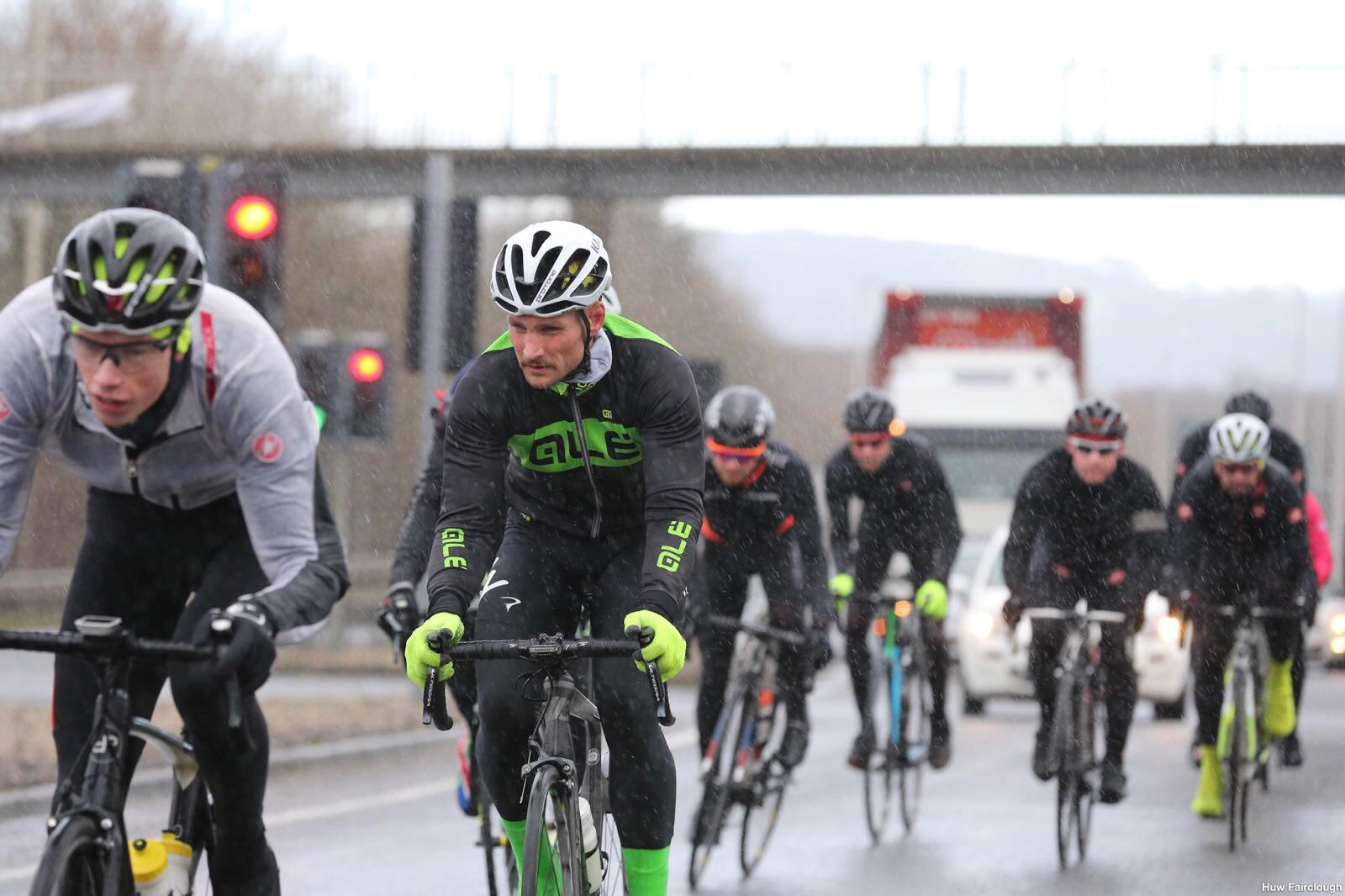
Setting correct cycling training zones ensures you ride at intensities that promote the adaptations which align to your goals in the sport. More often than not, target powers are put in place to hold you back from riding too hard, helping you to be disciplined in training.
All our coaches at Rowe & King adopt Dr Andy Coggan’s seven training zone model, which uses your threshold power as the key reference point, forming the basis for your various training zones. We recently blogged about increasing your functional threshold power (FTP), if you want to up your game!
Determining your threshold power is typically achieved via a test, where you produce maximal efforts over set durations. Whether using a 20 minute FTP Test, 2 x 8 Minute testing method, a ramp test, or adopting Critical Power as your benchmark – each have their pros and cons.
Additionally, Rowe & King utilise Training Peaks’ WKO5 Training Analysis software, which offers a rider’s Modelled Functional Threshold Power (MFTP). This is an estimate of your FTP, based on your power duration curve (power profile).
An accurate view of a riders threshold power and cycling training zones can be set, based off a few simple test efforts and data points.
The table below summarises each of the seven training zones – with a description of the associated power, heart rate and critically, rate of perceived exertion (RPE) for those who don’t use power or heart rate when riding. Source – Cycling Power Zones Explained
Power-Based Training Zones (Coggan Power Zones)
| Level | Name | % of FTP | % of LTHR) | Perceived Rate of Exertion | Description |
| 1 | Active Recovery | <55% | <68 | <2 | “Easy spinning” or “light pedal pressure”, i.e., very low-level exercise, too low in and of itself to induce significant physiological adaptations. Minimal sensation of leg effort/fatigue. Requires no concentration to maintain pace, and continuous conversation is possible. Typically used for active recovery after strenuous training days (or races), between interval efforts, or for socializing. |
| 2 | Endurance | 56-75% | 69-83% | 2-3 | “All day” pace, or classic long slow distance (LSD) training. A sensation of leg effort/fatigue is generally low but may rise periodically to higher levels (e.g., when climbing). Concentration is generally required to maintain effort only at the highest end of the range and/or during longer training sessions. Breathing is more regular than at Level 1, but continuous conversation is still possible. Frequent (daily) training sessions of moderate duration (e.g., two hours) at Level 2 are possible (provided dietary carbohydrate intake is adequate), but complete recovery from very long workouts may take more than 24 hrs. |
| 3 | Tempo | 76-90% | 84-94% | 3-4 | Typical intensity of fartlek workout, ‘spirited’ group ride, or briskly moving paceline. More frequent/greater sensation of leg effort/fatigue than at Level 2. Requires concentration to maintain alone, especially at the upper end of the range, to prevent the effort from falling back to Level 2. Breathing deeper and more rhythmic than Level 2, such that any conversation must be somewhat halting but not as difficult as at Level 4. Recovery from Level 3 training sessions is more difficult than after Level 2 workouts, but consecutive days of Level 3 training are still possible if the duration is not excessive and dietary carbohydrate intake is adequate. |
| 4 | Lactate Threshold | 91-105% | 95-105%(may not be achieved during initial phases of effort(s)) | 4-5 | Just below to just above TT effort, taking into account duration, current fitness, environmental conditions, etc. Essentially continuous sensation of moderate or even greater leg effort/fatigue. Continuous conversation is difficult at best due to the depth/frequency of breathing. Effort sufficiently high that sustained exercise at this level is mentally very taxing – therefore typically performed in training as multiple ‘repeats’, ‘modules’, or ‘blocks’ of 10-30 min duration. Consecutive days of training at Level 4 are possible, but such workouts are generally only performed when sufficiently rested/recovered from prior training so as to be able to maintain intensity. |
| 5 | VO2 Max | 106-120% | >106% | 6-7 | Typical intensity of longer (3-8 min) intervals intended to increase VO2max. Strong to severe sensations of leg effort/fatigue, such that completion of more than 30-40 min total training time is difficult at best. Conversation is not possible due to often ‘ragged’ breathing. Should generally be attempted only when adequately recovered from prior training — consecutive days of Level 5 work are not necessarily desirable, even if possible. Note: At this level, the average heart rate may not be due to slowness of heart rate response and/or ceiling imposed by maximum heart rate) |
| 6 | Anaerobic Capacity | >121% | N/A | >7 | Short (30 s to 3 min), high-intensity intervals designed to increase anaerobic capacity. Heart rate is generally not useful as a guide to intensity due to the non-steady-state nature of the effort. Severe sensation of leg effort/fatigue, and conversation impossible. Consecutive days of extended Level 6 training are usually not attempted. |
| 7 | Neuromuscular Power | N/A | N/A | * (Maximal) | Very short, very high-intensity efforts (e.g., jumps, standing starts, short sprints) that generally place greater stress on musculoskeletal rather than metabolic systems. Power is useful as a guide, but only in reference to prior similar efforts, not TT pace. |
@LukeRowe1990
@Dani_Rowe_MBE
@RoweandKing